Just recently down in the Solent at Cowes, I got hungry. Never been hungry before, but just felt really hungry.
I had been sailing all day from07630 through untils 7pm, just started the engine to take her into the marina and wham! Hungry.
If you sail, take some food, sweets, anything!
I don't like the new Hungry feeling.
Saturday, 21 June 2008


Ice found on Mars, sailing boats next!
Lander Finds Ice on Mars, Scientists Say
Discovery Is Key Clue In Determining Whether Planet Supported Life
A trench dug by the Phoenix lander reveals white ice beneath the surface soil of Mars. Scientists say they are sure it is frozen water and not salt. (Nasa Via Associated Press)
By David BrownWashington Post Staff Writer Saturday, June 21, 2008; Page A01
Scientists with the Phoenix Mars mission yesterday declared for certain that there is ice on the Red Planet, putting them an essential step closer to answering the question that has driven three decades of Mars exploration and centuries of Earth-bound speculation: Could there have been life there?
Pictures beamed 170 million miles to Earth from the Phoenix lander atop Mars's northern polar plain erased any doubt about the presence of ice, they said.
But the evidence came in a roundabout way. Last Sunday, several dice-size solids were observed at the bottom of a trench that had been dug by Phoenix's robotic arm. On Thursday, they were gone.
The only reasonable explanation, the scientists said, is that the objects were pieces of ice that evaporated into the dry Martian atmosphere through a process called sublimation. And the presence of ice means that Mars might once have had liquid water, which is essential for life -- at least as it is known on Earth.
It is too soon to know whether the entire astrophysical community will accept the disappearing objects reported yesterday as proof, but the Phoenix researchers said they do not need any more convincing.
The rocket thrusters that slowed Phoenix to a soft landing revealed a white, hard substance in the ground beneath it -- and tantalizingly out of reach -- when the lander touched down on May 25. Similar white material was visible when the robotic arm began to dig below the top few inches of Martian soil.
One possibility was that it was salt of some sort. But ice was always the more likely explanation.
"Salt does not behave like that," said Mark Lemmon, a scientist at Texas A&M University who is in charge of Phoenix's stereo surface imager. "We found what we were looking for. This tells us we have water ice within reach of the arm."
Although Mars is much too cold now to have liquid water on its surface, scientists believe that may not have always been the case. Images from as far back as the Viking missions in the 1970s revealed channels and gullies that appear to have been carved by flowing liquid at some point in the planet's history.
The Mars Odyssey orbiter, using a device called a gamma ray spectrometer, proved in 2002 that huge quantities of hydrogen existed under the Martian topsoil. Although many compounds are high in hydrogen (including petroleum), the scientists believe the only one that could be there in such quantity is water ice, which consists of two hydrogen atoms bonded to an oxygen atom.
"I don't know how you could have so much hydrogen under the surface, and something that disappears at just the temperature of ice, and have it not be ice," said Peter Smith, a physicist at the University of Arizona who is the principal investigator for the Phoenix mission.
Discovery Is Key Clue In Determining Whether Planet Supported Life
A trench dug by the Phoenix lander reveals white ice beneath the surface soil of Mars. Scientists say they are sure it is frozen water and not salt. (Nasa Via Associated Press)
By David BrownWashington Post Staff Writer Saturday, June 21, 2008; Page A01
Scientists with the Phoenix Mars mission yesterday declared for certain that there is ice on the Red Planet, putting them an essential step closer to answering the question that has driven three decades of Mars exploration and centuries of Earth-bound speculation: Could there have been life there?
Pictures beamed 170 million miles to Earth from the Phoenix lander atop Mars's northern polar plain erased any doubt about the presence of ice, they said.
But the evidence came in a roundabout way. Last Sunday, several dice-size solids were observed at the bottom of a trench that had been dug by Phoenix's robotic arm. On Thursday, they were gone.
The only reasonable explanation, the scientists said, is that the objects were pieces of ice that evaporated into the dry Martian atmosphere through a process called sublimation. And the presence of ice means that Mars might once have had liquid water, which is essential for life -- at least as it is known on Earth.
It is too soon to know whether the entire astrophysical community will accept the disappearing objects reported yesterday as proof, but the Phoenix researchers said they do not need any more convincing.
The rocket thrusters that slowed Phoenix to a soft landing revealed a white, hard substance in the ground beneath it -- and tantalizingly out of reach -- when the lander touched down on May 25. Similar white material was visible when the robotic arm began to dig below the top few inches of Martian soil.
One possibility was that it was salt of some sort. But ice was always the more likely explanation.
"Salt does not behave like that," said Mark Lemmon, a scientist at Texas A&M University who is in charge of Phoenix's stereo surface imager. "We found what we were looking for. This tells us we have water ice within reach of the arm."
Although Mars is much too cold now to have liquid water on its surface, scientists believe that may not have always been the case. Images from as far back as the Viking missions in the 1970s revealed channels and gullies that appear to have been carved by flowing liquid at some point in the planet's history.
The Mars Odyssey orbiter, using a device called a gamma ray spectrometer, proved in 2002 that huge quantities of hydrogen existed under the Martian topsoil. Although many compounds are high in hydrogen (including petroleum), the scientists believe the only one that could be there in such quantity is water ice, which consists of two hydrogen atoms bonded to an oxygen atom.
"I don't know how you could have so much hydrogen under the surface, and something that disappears at just the temperature of ice, and have it not be ice," said Peter Smith, a physicist at the University of Arizona who is the principal investigator for the Phoenix mission.
Windsurfing
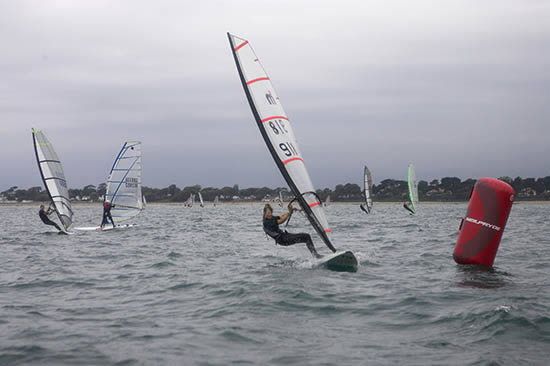
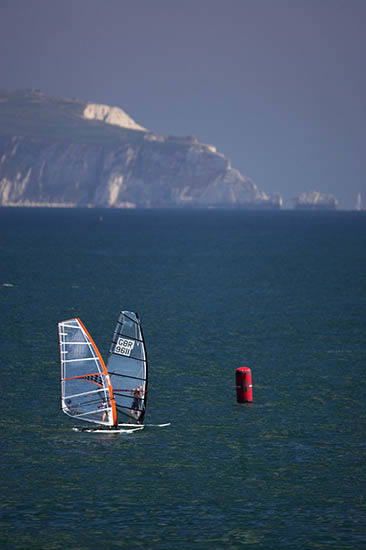
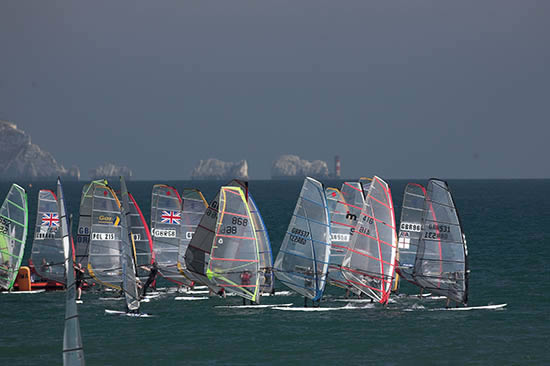
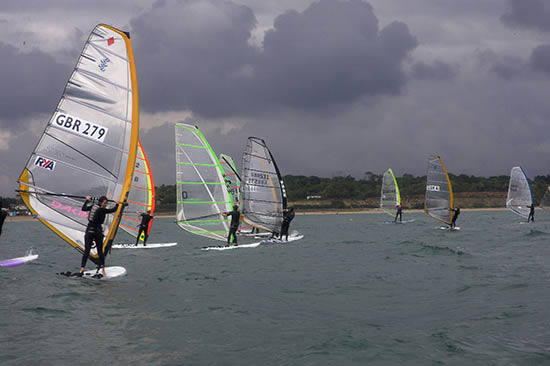
After an uncertain forecast all week, Saturday dawned warn and sunny with a brisk N-Easterly breeze. Christchurch is always a popular venue for the Raceboard fleet and this year was no exception with one of the strongest fleets for many a regatta.
Race one kicked off in around 20 knots of wind with Tom Naylor, Mark Carney and Jon Davis showing good form round the 1st lap. Up the 2nd beat Marc Carney managed a perfect execution of the now rarely seen upwind Catapult Cartwheel dismount allowing Rob Kent and Jon Davis to slip into the 2 top spots which is how the race ended.
The wind built further for the 2nd race and this time with a faultless demonstration of long board sailing Marc Carney lead the way home followed by Rob Kent with Jon Davis in 3rd thriving in the strong winds with his shiny new Tushingham lighting.
Over the lunch break the wind eased a little but the canny Tom Naylor and Chris Gibson still rigged their change down 7.5m sails. Then 10 minutes before the start of the 3rd race the wind kicked in stronger than ever with gusts above 25 knots. After a slightly shaky start in the 1st 2 races, armed with his trusty Neil Pryde 7.5, Tom Naylor demonstrated his high wind prowess leading the fleet home followed by Rob Kent still hanging on to his 9.5 Lightning. After missing a buoy in the 1st race Marc Carney suffered a broken dagger board in the 3rd leaving him reliant on 2 discards for an overall result.
The winds eased slightly for the last race of the day tempting Tom Naylor back on to his 9.5 Lightning (It has still not been confirmed whether this was a tactical choice of just his Male Machismo when he realised that Annette Kent had just completed the windiest race of the day hanging on to her 8.5m sail). This looked liked a good choice as he and Rob Kent lead the pack. Unfortunately for Tom some particularly large gusts kicked in on the last reach allowing him to demonstrate another classic long board downwind dismount but by the time hehad recovered Marc Carney followed by Paul Leone had slipped into 2nd and 3rd place.
So at the end of the 1st day Rob Kent was leading the fleet followed by Jon Davis in 2nd place with Paul Leone and Phil Hards in 3rd and 4th (both of who sailed consistly all day putting together a string of solid results). Annette Kent was 1st Lady having showed good form all day putting most of the men to shame by holding on to her 8.5m sail in all four races.
After a wild wet night Sunday dawned grey but dry with a light southerly wind, at this point many in the fleet realised just how much their bodies hurt from from the previous days exploits but our hopes of a quiet morning were dashed by our ruthlessly efficient race team who had a course laid and ready to go well before 10:00 am. The 1st race of the day kicked off in around 8 knots of wind with the Hythe duo of Phil Hards and Marc Carney clean ahead at the 1st windward mark. This situation persisted until the last lap where Rob Kent squeezed past Phil Hards into 2nd place.
After the 1st race the wind eased further and the sun came out making sunbathing the order of the day for the next few hours. Then in the afternoon just as the fleet were settling into other recreational activities, like sand castle building and burying children in the sand, a fickle sea breeze kicked in. Again the race team with military efficiency had the buoys laid and the fleet back on the water in a matter of minutes (leaving one 8-year buried up to her waist wondering how she was going to dig herself out of the sand - sorry Rebecca !).
After some further frustrating ups and downs in the wind finally we were able to get the 2nd race kicked off. This time, again demonstrating the light wind performance of his shiny new Demon 9.5, Chris Gibson lead the way round the 1st lap followed by Marc Carney and Phil Hards. Eventually with an impressive demonstration of upwind pumping Marc squeezed past Chris on the final windward leg. So the race ended with Marc 1st Chris 2nd with Rob Kent slipping into 3rd place on the final leg.
So after day-2 Rob Kent was still leading followed by Phil Hards in 2nd and Marc Carney waiting for his 2nd discard to jump to the top of the fleet.
Monday dawned wild wet and windy and with the stark realisation that this was a 3 day event. After sending the formula fleet out to test the conditions for us the race team called the race board fleet out for what proved to be the windiest race of the regatta. This race saw another return to form for Tom Naylor who armed with his trusty Neilpryde 7.5 (and a particular stylish 80’s buoyancy aid) lead the fleet home leaving Marc Carney and Rob Kent battling it out for 2nd place. Rob Kent overtook Marc Carney on the final leg only for Marc to coming storming past within 100m of the finishing line. So after 7 races Marc Carney was leading the regatta closely followed by Rob Kent with a tight battle forming for 3rd place between Phil Hards, Paul Leone and Tom Naylor.
Race-2 saw the wind drop to around 10 knots and inspite of only having his 8.5 Marc Carney lead the way to the 1st mark. Taking advantage of his bigger sail Rob Kent overtook Marc on the downwind leg.This is how the race ended with Tom Naylor in 3rd place and Phil Hards 4th. After a brief break for lunch the race team pulled us out for the final 2 races (Yes this was going to be an epic 10 race regatta). The 3rd race of the day finished in very similar fashion to the previous race with Rob Kent followed closely by Marc Carney and Tom Naylor. With Rob Kent and Marc Carney within one point of each other at the front of the fleet and Tom Naylor, Paul Leone and Phil Hards still neck and neck for 3rd place everything depended on the final race.
As we waited for the start the wind began to build again making Marc’s decision to stay with his 8.5 look like a sound choice. Again this race turned out to be close fight between Rob, Marc and Tom this time with the stronger wind Marc in the lead Rob 2nd and Tom 3rd.
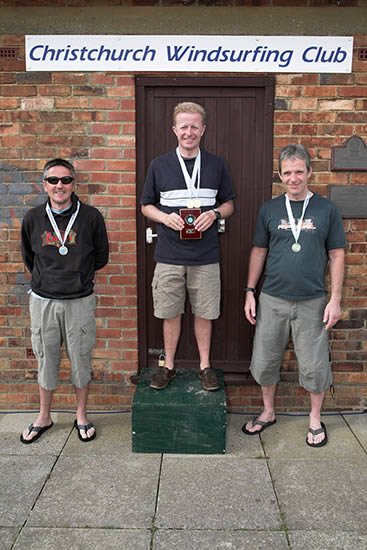
So after 3 days, 10 races, and more aching joints than you could shake a stick at the final result came down to a tie break with Rob Kent 1st Marc 2nd and after a strong, consistent performance on day-3 Tom pulling his way into 3rd place.
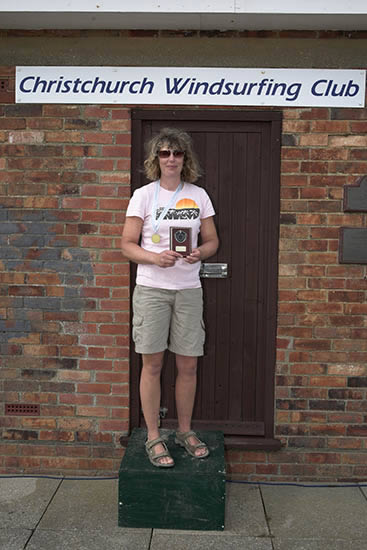
1st Lady was Annette Kent who finished 9 out of the 10 races and as far as I am aware the only sailor to finish the entire regatta without using a change down sail (Largely, I am told, because her husband was too mean to rig it for her).
I’d like to thank the race team for a particularly well run event in some quite tough conditions - Look forward to seeing everyone at Farmoor in a couple of weeks.
Race one kicked off in around 20 knots of wind with Tom Naylor, Mark Carney and Jon Davis showing good form round the 1st lap. Up the 2nd beat Marc Carney managed a perfect execution of the now rarely seen upwind Catapult Cartwheel dismount allowing Rob Kent and Jon Davis to slip into the 2 top spots which is how the race ended.
The wind built further for the 2nd race and this time with a faultless demonstration of long board sailing Marc Carney lead the way home followed by Rob Kent with Jon Davis in 3rd thriving in the strong winds with his shiny new Tushingham lighting.
Over the lunch break the wind eased a little but the canny Tom Naylor and Chris Gibson still rigged their change down 7.5m sails. Then 10 minutes before the start of the 3rd race the wind kicked in stronger than ever with gusts above 25 knots. After a slightly shaky start in the 1st 2 races, armed with his trusty Neil Pryde 7.5, Tom Naylor demonstrated his high wind prowess leading the fleet home followed by Rob Kent still hanging on to his 9.5 Lightning. After missing a buoy in the 1st race Marc Carney suffered a broken dagger board in the 3rd leaving him reliant on 2 discards for an overall result.
The winds eased slightly for the last race of the day tempting Tom Naylor back on to his 9.5 Lightning (It has still not been confirmed whether this was a tactical choice of just his Male Machismo when he realised that Annette Kent had just completed the windiest race of the day hanging on to her 8.5m sail). This looked liked a good choice as he and Rob Kent lead the pack. Unfortunately for Tom some particularly large gusts kicked in on the last reach allowing him to demonstrate another classic long board downwind dismount but by the time hehad recovered Marc Carney followed by Paul Leone had slipped into 2nd and 3rd place.
So at the end of the 1st day Rob Kent was leading the fleet followed by Jon Davis in 2nd place with Paul Leone and Phil Hards in 3rd and 4th (both of who sailed consistly all day putting together a string of solid results). Annette Kent was 1st Lady having showed good form all day putting most of the men to shame by holding on to her 8.5m sail in all four races.
After a wild wet night Sunday dawned grey but dry with a light southerly wind, at this point many in the fleet realised just how much their bodies hurt from from the previous days exploits but our hopes of a quiet morning were dashed by our ruthlessly efficient race team who had a course laid and ready to go well before 10:00 am. The 1st race of the day kicked off in around 8 knots of wind with the Hythe duo of Phil Hards and Marc Carney clean ahead at the 1st windward mark. This situation persisted until the last lap where Rob Kent squeezed past Phil Hards into 2nd place.
After the 1st race the wind eased further and the sun came out making sunbathing the order of the day for the next few hours. Then in the afternoon just as the fleet were settling into other recreational activities, like sand castle building and burying children in the sand, a fickle sea breeze kicked in. Again the race team with military efficiency had the buoys laid and the fleet back on the water in a matter of minutes (leaving one 8-year buried up to her waist wondering how she was going to dig herself out of the sand - sorry Rebecca !).
After some further frustrating ups and downs in the wind finally we were able to get the 2nd race kicked off. This time, again demonstrating the light wind performance of his shiny new Demon 9.5, Chris Gibson lead the way round the 1st lap followed by Marc Carney and Phil Hards. Eventually with an impressive demonstration of upwind pumping Marc squeezed past Chris on the final windward leg. So the race ended with Marc 1st Chris 2nd with Rob Kent slipping into 3rd place on the final leg.
So after day-2 Rob Kent was still leading followed by Phil Hards in 2nd and Marc Carney waiting for his 2nd discard to jump to the top of the fleet.
Monday dawned wild wet and windy and with the stark realisation that this was a 3 day event. After sending the formula fleet out to test the conditions for us the race team called the race board fleet out for what proved to be the windiest race of the regatta. This race saw another return to form for Tom Naylor who armed with his trusty Neilpryde 7.5 (and a particular stylish 80’s buoyancy aid) lead the fleet home leaving Marc Carney and Rob Kent battling it out for 2nd place. Rob Kent overtook Marc Carney on the final leg only for Marc to coming storming past within 100m of the finishing line. So after 7 races Marc Carney was leading the regatta closely followed by Rob Kent with a tight battle forming for 3rd place between Phil Hards, Paul Leone and Tom Naylor.
Race-2 saw the wind drop to around 10 knots and inspite of only having his 8.5 Marc Carney lead the way to the 1st mark. Taking advantage of his bigger sail Rob Kent overtook Marc on the downwind leg.This is how the race ended with Tom Naylor in 3rd place and Phil Hards 4th. After a brief break for lunch the race team pulled us out for the final 2 races (Yes this was going to be an epic 10 race regatta). The 3rd race of the day finished in very similar fashion to the previous race with Rob Kent followed closely by Marc Carney and Tom Naylor. With Rob Kent and Marc Carney within one point of each other at the front of the fleet and Tom Naylor, Paul Leone and Phil Hards still neck and neck for 3rd place everything depended on the final race.
As we waited for the start the wind began to build again making Marc’s decision to stay with his 8.5 look like a sound choice. Again this race turned out to be close fight between Rob, Marc and Tom this time with the stronger wind Marc in the lead Rob 2nd and Tom 3rd.
So after 3 days, 10 races, and more aching joints than you could shake a stick at the final result came down to a tie break with Rob Kent 1st Marc 2nd and after a strong, consistent performance on day-3 Tom pulling his way into 3rd place.
1st Lady was Annette Kent who finished 9 out of the 10 races and as far as I am aware the only sailor to finish the entire regatta without using a change down sail (Largely, I am told, because her husband was too mean to rig it for her).
I’d like to thank the race team for a particularly well run event in some quite tough conditions - Look forward to seeing everyone at Farmoor in a couple of weeks.
Something special
You can do it sitting down...There are different sorts of sand-yachting. With "Char à voile" (sail-carting) you are sitting down in something like a sail-driven go-kart, so you have a safely low centre of gravity.
Sand-yachts are good for beginners - it feels safer to be closer to the ground while you're getting started! Most people soon get the hang of controlling their sails by the simple pulley system.
...or standing upYou can also try "speed-sailing", which you do standing up - it's like sail-boarding on wheels.
You stand up on a small platform, leaning out to balance the sail - and generally go faster than a beginner's sand-yacht.
You can do it sitting down (called "char à voile")...or standing up (called "speed-sailing").
Getting startedSeveral centres offer lessons - for children and adults - and hire the equipment. Most take groups as well as individuals.
Sand-yachts are good for beginners - it feels safer to be closer to the ground while you're getting started! Most people soon get the hang of controlling their sails by the simple pulley system.
...or standing upYou can also try "speed-sailing", which you do standing up - it's like sail-boarding on wheels.
You stand up on a small platform, leaning out to balance the sail - and generally go faster than a beginner's sand-yacht.
You can do it sitting down (called "char à voile")...or standing up (called "speed-sailing").
Getting startedSeveral centres offer lessons - for children and adults - and hire the equipment. Most take groups as well as individuals.
Subscribe to:
Comments (Atom)